
Your Next Customer May Not Be Human
(My article, published in Inc. Türkiye)
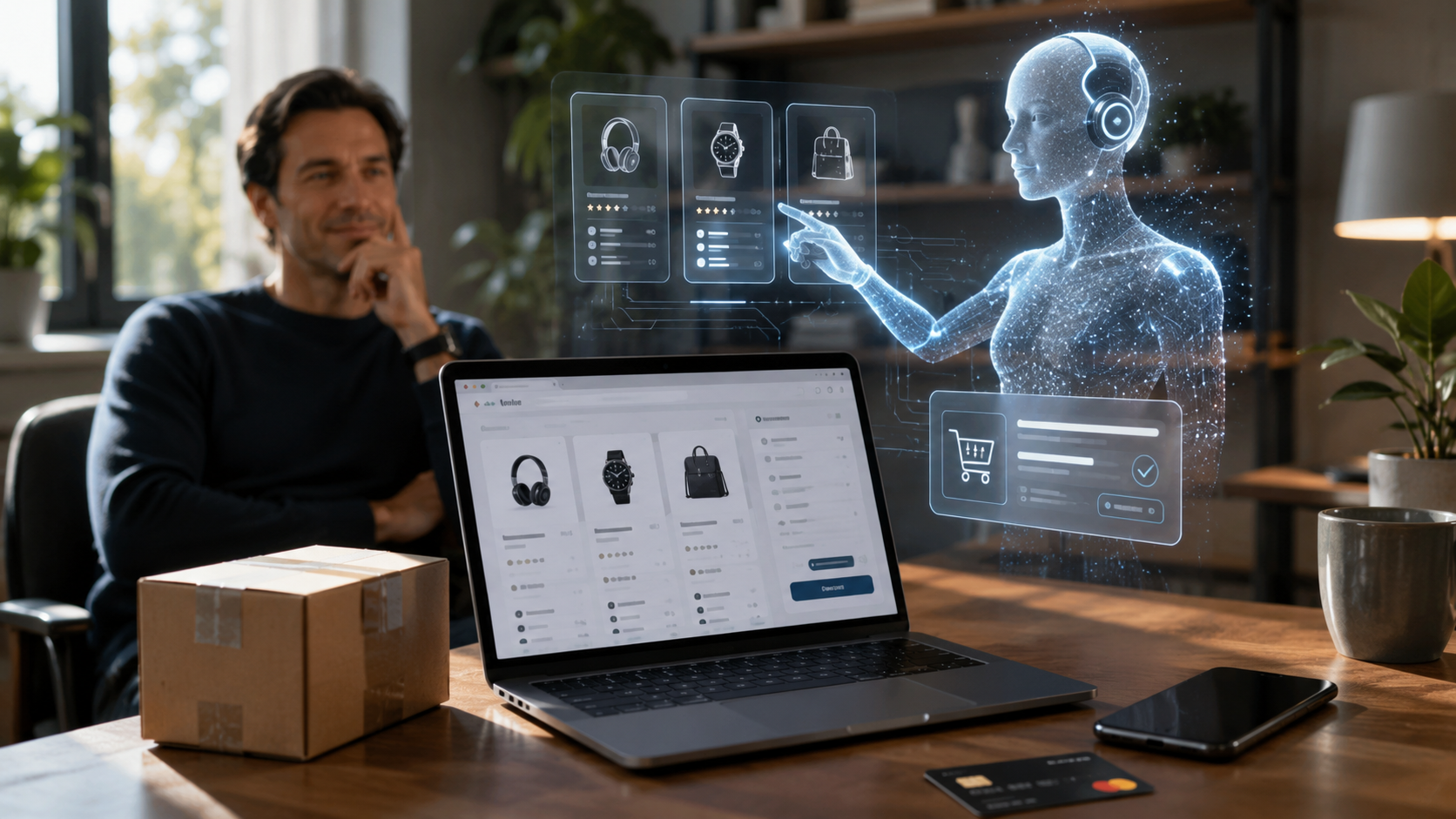
One morning, a new order appears in your company’s sales system. The customer has not browsed your website, seen your advertisement, or spoken to your sales representative. In fact, the person who will use your product has not even placed the order themselves. Instead, an AI agent has understood its owner’s needs, scanned the alternatives in the market, compared prices and delivery times, identified the best option within the specified budget, and initiated the purchase. Today, this may sound a little like science fiction. But when we look at the infrastructure technology companies are building, it becomes clear that this is no longer a scenario from the distant future.
This year, Google announced an open standard called the Universal Commerce Protocol. Its aim is to enable AI agents to communicate with the systems of different companies through a common language, from product discovery and purchasing to post-sales transactions. Visa has launched a pilot of Intelligent Commerce Connect, an infrastructure that will allow companies to accept payments initiated by AI agents. Mastercard, meanwhile, introduced Agent Pay for Machines in June: a payment system designed to enable machines and AI agents to transact with one another at high speed within predefined authorization and spending limits.
Each of these is a different initiative. But they all point in the same direction: The new users of the internet may not be humans alone.
The customer’s representative is arriving
In today’s AI-powered shopping experiences, humans are still very much in the driver’s seat. We ask ChatGPT or Gemini, “Find me a good coffee machine for under $500.” AI compares the options, we make the decision, and then we go to the seller’s website to complete the purchase.
This model has already begun to grow. According to Adobe Analytics data reported by Reuters in August 2026, 41% of U.S. consumers used generative AI for online shopping in June. Visitors arriving at retail websites from AI services also generated 41% more revenue per visit than visitors coming from other channels.
But the real turning point will come when AI moves from giving advice to taking action. Instead of simply asking an AI agent, “Which product should I buy?” we will be able to say: “I’m going to Ankara next Friday. Buy me a flight that gets me there in time for my 11:00 a.m. meeting. I want a window seat. My total budget must not exceed $200. And I don’t want to fly before 7:00 a.m.” From that point on, it becomes a task for the agent: find the alternatives, evaluate the conditions, complete the transaction within its purchasing authority, and add it to the calendar.
In that case, who is the airline’s customer?
Of course, you are the one who will sit in the seat. You are also the one whose money is being spent. But the interface deciding which company’s offer will be considered, which one will be eliminated, and which product will ultimately be purchased may no longer be a human being. It may be an algorithm.
Marketing’s target audience is changing
This shift creates an extremely interesting question for marketing. For years, companies have worked to make their products more attractive to people. Packaging, slogans, commercials, store design, websites… Their common purpose has been to capture people’s attention and influence their preferences.
But what if an AI agent is making the first cut on behalf of your customer? How do you influence it?
An algorithm will not be impressed by the celebrity in your commercial. It will not get excited by how attractive your packaging looks on the shelf. It will not panic and make a purchase because it sees the words “limited stock.” But it can compare your price, delivery time, warranty terms, technical specifications, customer reviews, and return policy.
That is why the central question of digital marketing may gradually shift from “How do I rank higher on Google?” to “How do I make sure I am among the options AI agents can evaluate?”
One of the ideas behind Google’s new Universal Commerce Protocol is exactly this: enabling product discovery, purchasing, and post-sales processes to take place between agents and business systems through a common standard. In other words, the storefront of the future will look very different from the storefront of today… the storefront will be built from “data.”
Is the decision-maker in shopping changing completely?
It is easy to conclude from this that the decision will no longer belong to humans, but that is not quite the case. An AI agent will not create its own preferences; to a large extent, it will represent ours.
If we say, “Buy the cheapest one,” price may become the deciding factor. But if we say, “I’ve been using Apple for years, so stay within the Apple ecosystem if possible,” brand preference becomes one of the algorithm’s decision criteria. Preferences such as “Choose a brand I can trust for my child,” “Prefer brands I’ve used before,” or “Choose from companies with strong environmental credentials” will likewise become part of the machine’s evaluation system.
Today, brands try to persuade us at the moment of purchase. Tomorrow’s priority will be to create a preference strong enough to become part of the instructions we give our AI agents. That is a much harder marketing problem. Because instead of dealing with a consumer whose mind you might change in a store, you are dealing with a representative that applies predefined criteria with extraordinary discipline.
How will customer loyalty evolve?
The second major battle will be fought over the customer relationship.
Today, Amazon, Trendyol, Booking.com, or any e-commerce company wants to know what its customers search for, what they click on, what they buy, and when they return. Because that data forms the foundation of future sales. Once an AI agent enters the picture, part of that relationship will be mediated through the agent.
We can already see Walmart, Ulta Beauty, Wayfair, and other retailers interviewed by Reuters wrestling with exactly this problem. Companies want to be visible inside systems such as ChatGPT and Gemini, but they prefer the transaction itself to be completed on their own websites. They do not want to lose the advantage of knowing who their customer is and what that customer does.
This raises one of the most important strategic questions of the future: Who will the customer be loyal to? The brand, the sales platform, or the AI agent that manages everything on their behalf?
If your agent knows you extremely well, understands your past purchases, manages your budget, and consistently makes good decisions, perhaps the strongest customer relationship will no longer be with a retailer at all. It may be with the agent itself.
The real revolution may happen in B2B
We should not limit this discussion to people buying shoes or airline tickets. One of the examples Mastercard gives in its Agent Pay for Machines announcement comes from logistics. An AI agent could make freight payments during transportation, reserve loading capacity, purchase cold-chain monitoring services, and automatically pay warehouse fees. In another example, Mastercard describes a scenario in which an entrepreneur asks an AI agent to build an online store, and the agent purchases services such as a domain name, hosting, visual assets, and payment infrastructure within a predefined budget.
At that point, there is no longer even a consumer shopping in the traditional sense. One business process is purchasing services from another business process.
A factory system could monitor energy prices and buy the electricity it needs. A software agent could purchase computing capacity from different providers in real time. A company’s procurement agent could detect that office supplies are running low and automatically reorder them from approved suppliers.
Machines can also carry out transactions that would be too small to be economical for humans, and they can do so far more frequently. Mastercard’s new system is specifically designed to support high-frequency, low-value, continuously occurring machine payments. Assigning an identity to each agent, defining spending limits in advance, and ensuring transactions remain within predefined permissions are among the core elements of the system.
Are you ready for your new customer?
Of course, none of this will happen tomorrow morning. Consumers have trust concerns. Companies have reservations about sharing data. And there are important questions around responsibility when an AI agent buys the wrong product, makes an incorrect payment, or exceeds its authority. That is precisely why Visa and Mastercard place so much emphasis on identity verification, predefined spending limits, authorization, and secure payment mechanisms in their systems.
But the overall direction is not changing. People are using AI more and more in their purchasing decisions. AI systems are becoming connected to a growing number of business processes and payment infrastructures. Payment companies such as Visa and Mastercard are developing systems that allow agents to carry out authorized transactions. Platforms such as Google are creating common commerce standards so that companies and agents can understand one another.
That is why the question companies should be asking today may not be, “Will AI agents really shop?” A better question may be: “One day, when my customer’s AI agent compares my product with my competitor’s, what reasons will I give it to choose me?”
A new era of commerce is at the door. And this time, the customer knocking may not be human.
Mustafa İÇİL