
When Will Robots Enter Our Homes?
(My article, published in Inc. Türkiye)
Robots have long been one of the greatest promises of the future. Since childhood, the future we were told to expect always included robots: mechanical assistants that would clean the house, cook meals, care for the elderly, keep children company, open the door, organize the cupboards, and perhaps even chat with us. They were an almost permanent feature of science fiction: machines that walked like humans, spoke like humans, and thought like humans.
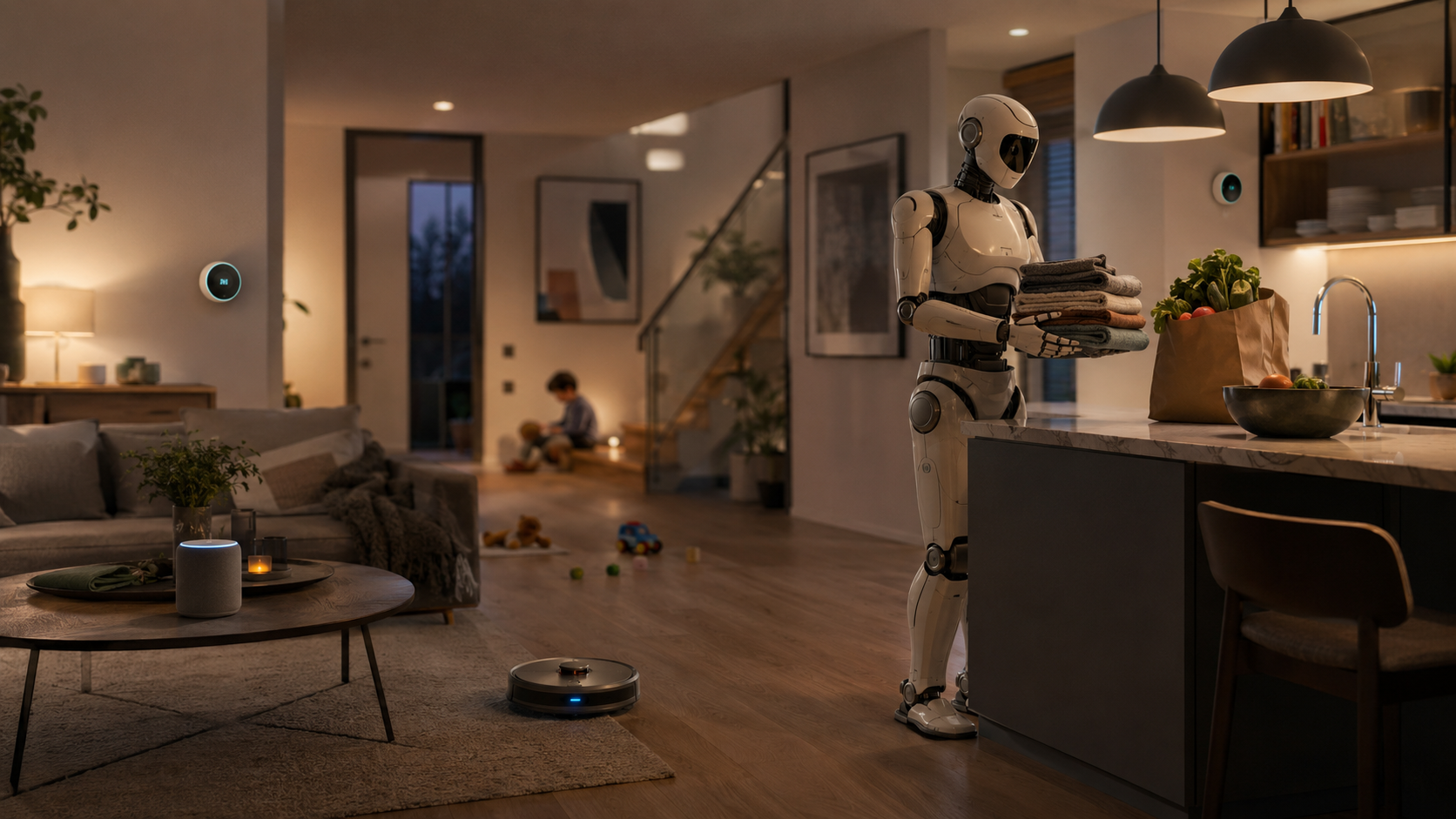
But when we arrive in 2026 and look around our homes, the picture is still far more modest. Yes, we have robot vacuum cleaners. We have robotic lawn mowers. We have smart cameras, sensors, voice assistants, automatic curtains, and smart plugs. But the “home robot” most of us imagined is still nowhere to be seen. The multi-purpose robot that prepares our morning coffee, tidies up the messy kitchen, folds the laundry, notices what is missing from the refrigerator, calls for help in a medical emergency, and packs our child’s school bag has not yet entered our lives. So why not?
In fact, robots have already entered the world. They simply entered factories, warehouses, hospitals, hotels, restaurants, and logistics centers before they entered our homes. According to the International Federation of Robotics’ 2025 report, sales of professional service robots reached around 200,000 units in 2024, growing by 9 percent compared with the previous year. The same report emphasizes that labor shortages and aging populations are increasing demand for robots.
So it would not be accurate to say that the robot revolution has not begun. A more accurate statement would be this: the robot revolution has begun, but it began outside the home first. That is because factories are ideal environments for robots. The floor is flat, the task is clear, the environment can be controlled, people move within defined areas, and risks can be calculated. A robotic arm can repeat the same movement thousands of times. A warehouse robot can carry boxes from specific shelves to specific points. A hospital robot can distribute medicine or supplies. In that world, uncertainty is limited.
The home, however, is one of the most difficult environments in the world for robots. Every home is different. One home has carpets; another has wooden floors. In one home, children’s toys are scattered across the floor; in another, a pet has knocked over its food bowl. In one home, a chair has been pulled out; in another, a door has been left half open. There are knives in the kitchen, wet floors in the bathroom, fragile glasses in the living room, slippers in the hallway, and cables in the children’s room. What we call home is a natural environment for humans, but a chaotic one for robots.
That is why the success of robot vacuum cleaners gives us both hope and a sense of the limits. It gives us hope because people have begun to accept robots into their homes. We have grown used to a robot moving around the house, mapping the rooms, going under the bed, and circling the sofa. But it also shows us the limit: a robot vacuum cleaner performs a single task. Its job is narrow. Its ability to understand objects is limited. It cannot always distinguish a sock from a cable. Sometimes it sees cat food and a piece of a toy as the same kind of “obstacle.” In other words, it can move inside the home, but truly understanding the home is still difficult.
Today’s major turning point is here: it is not enough for robots merely to move; they must also understand their surroundings. Holding a glass is harder than seeing a glass. Seeing a glass is easier than understanding whether that glass is dirty or clean, full or empty, made of glass or plastic, fragile or not, whether it should be picked up or left where it is. These decisions, which seem ordinary to humans, are complex engineering problems for robots.
That is why humanoid robots hold a special place in the discussion about home robots. The world was designed for humans. Door handles were designed for our hands, stairs for our legs, kitchen counters for our height, drawers for the way we move. Seen from this perspective, it makes sense that a robot designed to work at home might resemble a human. Two arms, two legs, hands, fingers, eyes that function like cameras… The human form may be a natural solution for a human environment.
Indeed, interest in humanoid robots has been growing rapidly in recent years. At CES 2026, special sessions explored how humanoid robots could transform work and home life. Nvidia’s announcement that it is working with LG on humanoid robots and data centers also shows that robots are no longer merely showpieces at technology fairs; they have entered the strategic agenda of major technology and industrial players.
But we need to be careful here. Because the idea of a humanoid robot is so attractive, it is also highly vulnerable to hype. There is a big difference between a robot walking on stage, dancing, or carrying a box, and a robot reliably providing elderly care at home. When a robot makes a mistake in the home, the result is not merely inefficiency; it can create a physical safety risk. A robot working next to a child, an elderly person, in a kitchen, in a bathroom, or on stairs has a very low tolerance for error.
For this reason, the future of home robots will probably not arrive through one giant leap. It will progress layer by layer.
The first layer has already begun: single-purpose robots. Limited but useful tasks such as vacuuming, mopping, mowing the lawn, cleaning the pool, and monitoring home security.
The second layer will come through indoor sensors and smart devices. Refrigerators, ovens, cameras, door locks, health devices, watches, lighting systems, and energy management systems will work together more harmoniously. At this point, the robot does not necessarily have to be a machine that walks like a human. Sometimes the home itself will become robotic. Doors, lights, security, cleaning, and energy systems will turn into an invisible automation network.
The third layer will be care and companionship robots. This may be the strongest justification for home robots. The number of elderly people living alone is increasing. The burden on healthcare systems is growing. Families are getting smaller, and care labor is becoming more expensive. In such a world, a home robot may become not a luxury toy, but a social necessity. Robots that remind people to take their medication, detect falls, notify relatives in an emergency, bring simple objects, and reduce feelings of loneliness may become one of the first major use cases.
The fourth layer will be true multi-purpose home assistants. Machines that fold laundry, help in the kitchen, put away shopping bags, tidy up clutter, and monitor the safety of children and elderly family members. But this is the most difficult stage. Here, the robot’s physical capability, decision-making quality, and reliability must all be extremely high.
So when robots enter our homes, will they only make our lives easier? No. New questions will also begin. If a robot moves around the home, it will most likely carry cameras, microphones, and sensors. It will map the house. It will know when we wake up, where we sit, who comes home, which room the child is playing in, and how much an elderly family member moves. Will this data stay on the device, or will it go to the cloud? Will it be processed by the manufacturer? Will it be connected to advertising systems? Will insurance companies gain access to this data? Home robots will create not only convenience, but also a major privacy debate.
Another issue is emotional attachment. People form relationships with machines in the home faster than we might think. There are millions of people who name their robot vacuum cleaners, talk to their voice assistants, and communicate with their dogs through pet cameras. Tomorrow, an elderly person may become attached to a robot that reminds them to take their medicine every day, asks how they are, and calls for help if they fall. This does not necessarily have to be a bad thing. But if technological companionship begins to replace human relationships, we will also need to think about its social consequences.
The economic dimension is also important. The first advanced home robots will probably not be cheap. This may mean that the technology first enters high-income households, while some of the people who need care support the most are left behind. Yet in elderly care, disability support, and health monitoring, the greatest social benefit of robots will emerge only when they become accessible.
That is why the answer to the question “When will robots enter our homes?” actually depends on the answer to another question: “Which robots are we talking about?” If we count robot vacuum cleaners, robots have already entered the home. If we count invisible automation systems that manage home security, energy, lighting, and cleaning, the process is accelerating. If we are talking about special-purpose robots that support the elderly and handle small tasks at home, we will see more examples in the next few years. But if we mean the multi-purpose, reliable, reasonably priced humanoid home assistant we see in science fiction films, that still needs more time.
Still, the direction is clear. Robots will not one day knock on our door and ask to come in. They are already quietly finding their way inside. The real question is not whether robots will enter our homes. The real question is this: are we ready to share the privacy of our homes with machines that make our lives easier? Because when robots enter the home, they will not only take over tasks. They will also redefine the boundaries of the most private space we have.
Mustafa İÇİL